

Before you enter the market and talk to vendors, it’s important to align goals, expectations, and priorities with your team and company. Here are a few questions to discuss internally that will help you weigh the tradeoffs and conclude on how it’s best to deploy eSIM IoT for your objectives.
1. eSIM IoT isn’t set and forget – are you ready to manage the profiles?
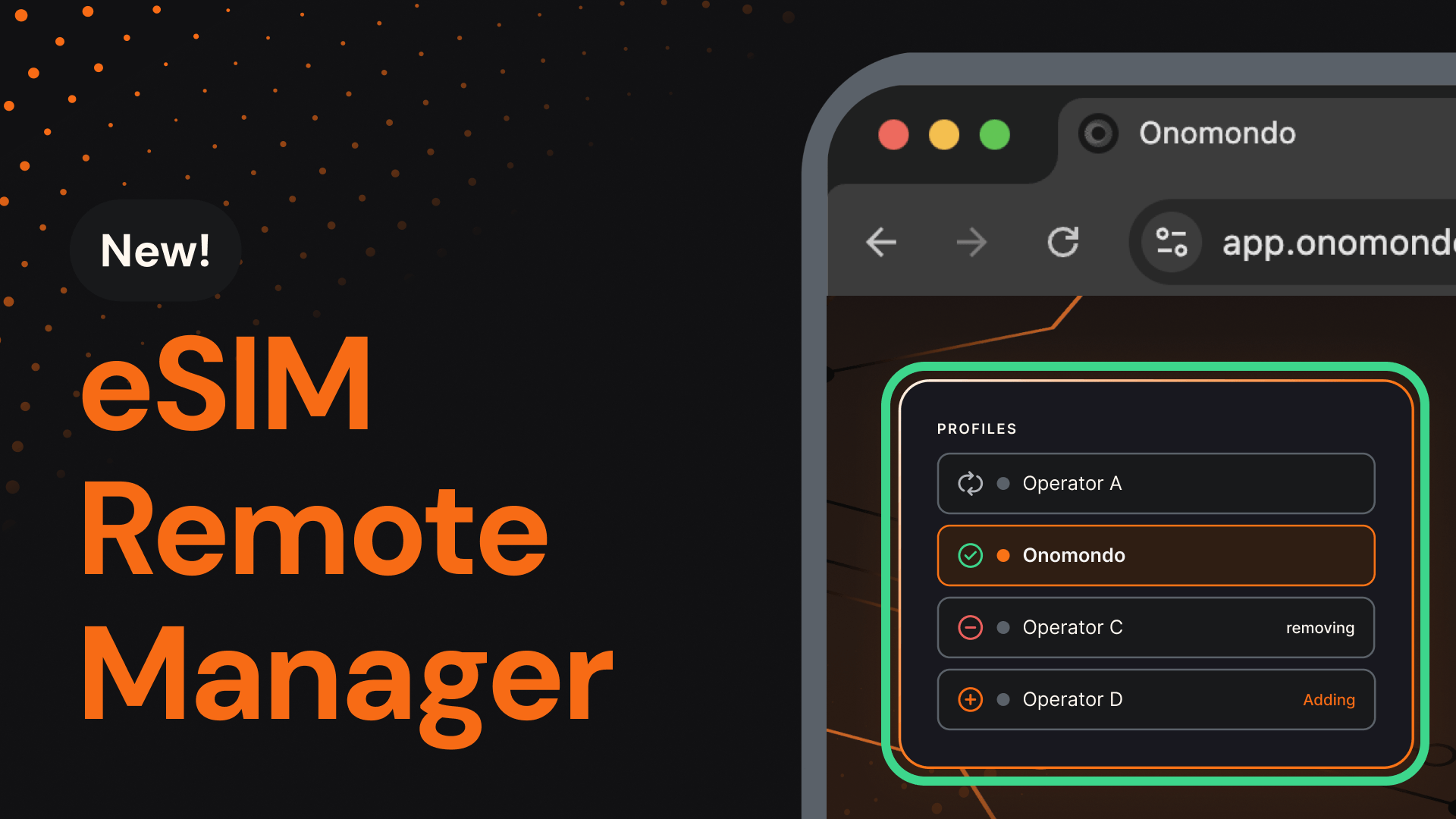
Managing a fleet with eSIM IoT solves many problems but adds complexity. Make sure that you are prepared to actively manage connectivity for your fleet. Savings from eSIM IoT require managing multiple agreements and being proactive with your profile choices – knowing where the devices are, what they are doing, and whether it’s beneficial to swap profiles. So make sure you know what you’re stepping into, scope the extra costs, and ensure that this investment will bring a return for you.
2. How important is vendor lock-in to you?
Another central question for you and the team. Vendor lock-in with eSIM IoT is still a high probability case but the lock-in shifts from the connectivity provider to the SIM manufacturer.
This is how it manifests in the ecosystem components: When you buy the eUICC SIM cards with IPAe, that IPAe may connect only to a prespecified eSIM IoT Remote Manager. Consequently, this would limit your access to all connectivity vendors. So, if avoiding vendor lock-in is a top priority for you, you might either want to consider a product design with the IPA on the device (IPAd). If efficiency is the top priority for you, IPAe does the job.
Navigate the SGP.32 market with confidence
Over 90 pages with a single goal: to level the playing field with eSIM IoT vendors. Our complete eSIM IoT buyer’s guide is your SGP.32 map from exploration to procurement.
3. Is your organization ready?
Syncing with your engineering team might reveal a lot about the resource availability. SGP.32 can be resource-intensive and it’s important to scope the technical debt, any open projects, e.g., active migrations, and your committed roadmap before committing to SGP.32 with hardware decisions and creating a one-way path.
4. What is your ideal balance between maintaining control and investing resources?
There is no right or wrong answer to this but this balance will look different for every company. What is critical is to decide what is more important for your organization beforehand –and how much more important– so that you can procure the right product and design the project that responds to the most important drivers for you.
5. If SGP.32 disappeared tomorrow, could you still ship your committed roadmap?
Answer this one honestly as your answer decides what kind of buyer you are, and shapes every vendor question that follows.
If the honest answer is no, you’re solving a concrete operational problem, usually one of:
- A committed launch in a market with permanent roaming bans: A local profile is mandatory, and the alternatives (regional variants, SIM swaps) break your cost model.
- An expansion your provider can’t follow at a viable cost: a different operator per region on one SKU needs remote provisioning.
- A soldered-SIM hardware generation: the SIM decision is irreversible for the life of that generation of the devices.
Buy against that pain, on that timeline, and press vendors on practice, not theory.
If the honest answer is yes, the drivers are insurance and optionality. This answer is equally legitimate, but different. Your drivers here are:
- Avoiding vendor lock-in or renewal fight.
- As an OEM, your customers may ask you to own the connectivity: The previously bundled connectivity becomes a customer objection in your sales process.
Here, you’re weighing premium against hedge: lean your questions into cost, terms, and how painless the optionality really is. Perhaps in this case, it’s worth looking into other solutions as well.
Either answer is fine. Knowing which is true before you talk to vendors is what matters.
On the same page? Now you can browse the market!
The way your team answers these 5 questions separates the hype from a proper solution fit. Your answers will also give you helpful clarity into what your business actually needs, how much control you want to keep, and what you’re willing to spend to get it. Answer them honestly as a team, and you walk into vendor conversations knowing exactly what you’re looking for instead of being talked into someone else’s version of the answer.
But most importantly, with your team and goals aligned, you can hold eSIM IoT vendors to your priorities rather than their pitch. The next steps are:
- Knowing what you are buying and for whom, and
- Knowing exactly what to ask vendors