United Kingdom (English)
 Global (English)
 Australia (English)
 German
 Italian
 Spanish


Extend battery and device life.
Engineered for ultra-low power consumption, NB-IoT allows your IoT devices to operate longer without needing a battery replacement, increasing revenue and reducing costs.
Optimize power consumption, improve coverage, and reduce costs with NB-IoT, a low-power wide-area network made for IoT.

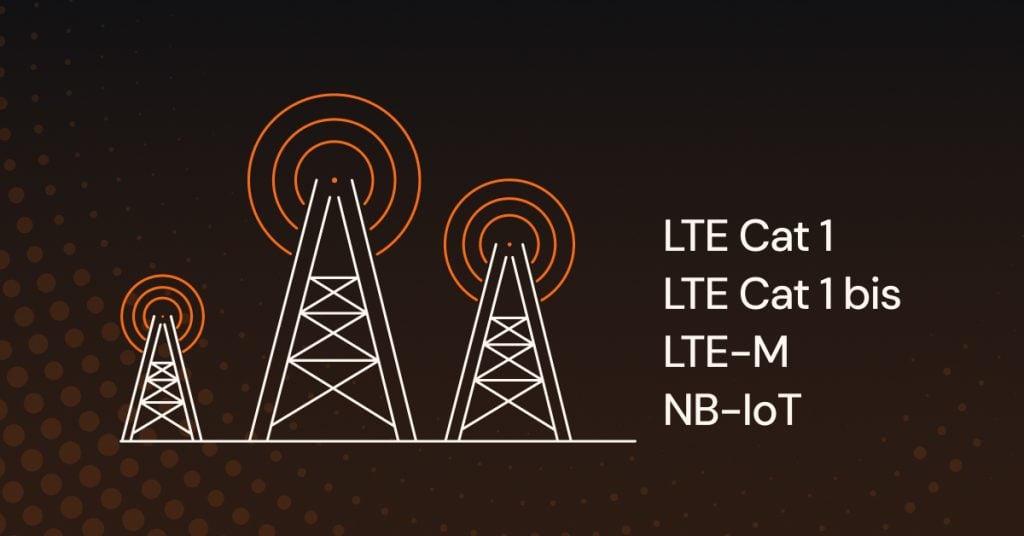
Narrow-Band Internet of Things (NB-IoT) is a cellular low-power wide-area network (LPWAN) that includes Cat NB1 and Cat NB2. This technology is ideal for static, power-constrained solutions such as smart meters, environmental monitoring, and smart cities.
Showing 1–5 of 469 networks
| network | mcc mnc | country | region | Technologies | ||
|---|---|---|---|---|---|---|
| 2degrees | 53024 | New Zealand | Oceania | LTE | ||
| 3 Denmark | 23806 | Denmark | Europe | LTE LTE-M | ||
| 3 Macau (+1 secondary network) | 45503 | Macao | Asia | LTE | ||
| 7acht | 29502 | Liechtenstein | Europe | 2G 3G LTE | ||
| 9mobile Nigeria | 62160 | Nigeria | Africa | 2G 3G LTE | ||
Secondary
networks
|
||||||
Secondary networks
|
||||||
Engineered for ultra-low power consumption, NB-IoT allows your IoT devices to operate longer without needing a battery replacement, increasing revenue and reducing costs.
Onomondo SIMs offer global coverage with all form factors (2FF, 3FF, 4FF, MFF2, eSIM, MFF-XS, iSIM, SoftSIM) and architectures (UICC and eUICC). It has never been easier to develop, deploy, and operate IoT devices locally or worldwide.

Enhance signal quality and network control with non-steered SIM cards. Connect all your devices securely to a global network with Onomondo IoT SIMs.
Ready to experience next-generation IoT connectivity? Create an account, explore the platform, and start testing Onomondo’s IoT SIM cards for free.
LTE-M and NB-IoT are developed for IoT, but not suited to all use cases. This comparison table will guide you on the value that LTE-M SIMs or NB-IoT SIMs bring so you can decide which one fits better to your industry or use case.
| NB-IoT SIM | LTE-M SIM | |
|---|---|---|
| Uplink/Downlink | Low (kbit/s). LTE Cat NB2 offers max 159 Kbit/s uplink and 127 Kbit/s downlink. | High (Mbits/s). LTE Cat M2 offers max 7 Mbit/s uplink and 4 Mbit/s downlink. |
| Coverage/Penetration | Great coverage and penetration. | Great coverage and penetration. |
| Global availability | Good availability. Requires new infrastructure that is cheaper to roll-out than standard LTE. | Great availability where LTE already exists. Built on existing LTE technology. |
| Roaming capability | Technically possible, but basically non-existent in reality. Check regions of interest. | Good roaming availability. Check regions of interest. |
| Module costs | NB-IoT modules are typically slightly cheaper than LTE-M. | LTE-M modules are typically slightly more expensive than NB-IoT. |
| Power saving features | NB-IoT standards support PSM and eDRX, but availability depends on local networks. | LTE-M standards support PSM and eDRX but availability depends on local networks. |
| Mobility | There’s no handover when moving with NB-IoT, making it best suited to static devices. | LTE-M is suitable for static and mobile applications. |
| Remote provisioning | Typically no SMS support which is not good for eUICC (eSIM) remote provisioning freedom to leave (changing SIM operator). | Supports SMS. Freedom to leave and eUICC (eSIM) remote provisioning are possible. |
Consibio’s intelligent plug-and-play sensor platform specializes in bio-industries. Find out how they are helping optimise wastewater management with IoT.

Interested to hear more about our IoT SIMs and global coverage? Get in touch by filling out the form or sign up for a free trial here.
We couldn’t load this form right now. Please reload the page to try again.
Read articles from our blog to learn more about how to overcome the challenges of IoT connectivity.