

The shift
For two decades, the operator chosen on the factory line effectively stayed with the device for life. If the connectivity stopped working for the business, changing it often meant replacing the SIM or sending someone into the field. This was manageable with smaller fleets. Today, it doesn’t scale.
IoT deployments span more markets, devices stay in the field for years, and more countries are restricting permanent roaming. To keep pace with market demand, teams must be able to change connectivity without changing the hardware.

The catch
The SGP.32 standard was designed for exactly this reason: to let businesses switch operator profiles remotely, over the air, without replacing the SIM or touching the device.
SGP.32 can remove operator lock-in but not necessarily remove vendor lock-in. The eIM is the control point for profile management across the fleet; however, if the eIM you choose doesn’t let you move that control elsewhere, you haven’t eliminated the dependency. You’ve just moved it.
So the difficult question is no longer whether to adopt SGP.32, it’s who you trust to hold the eIM.
What’s new
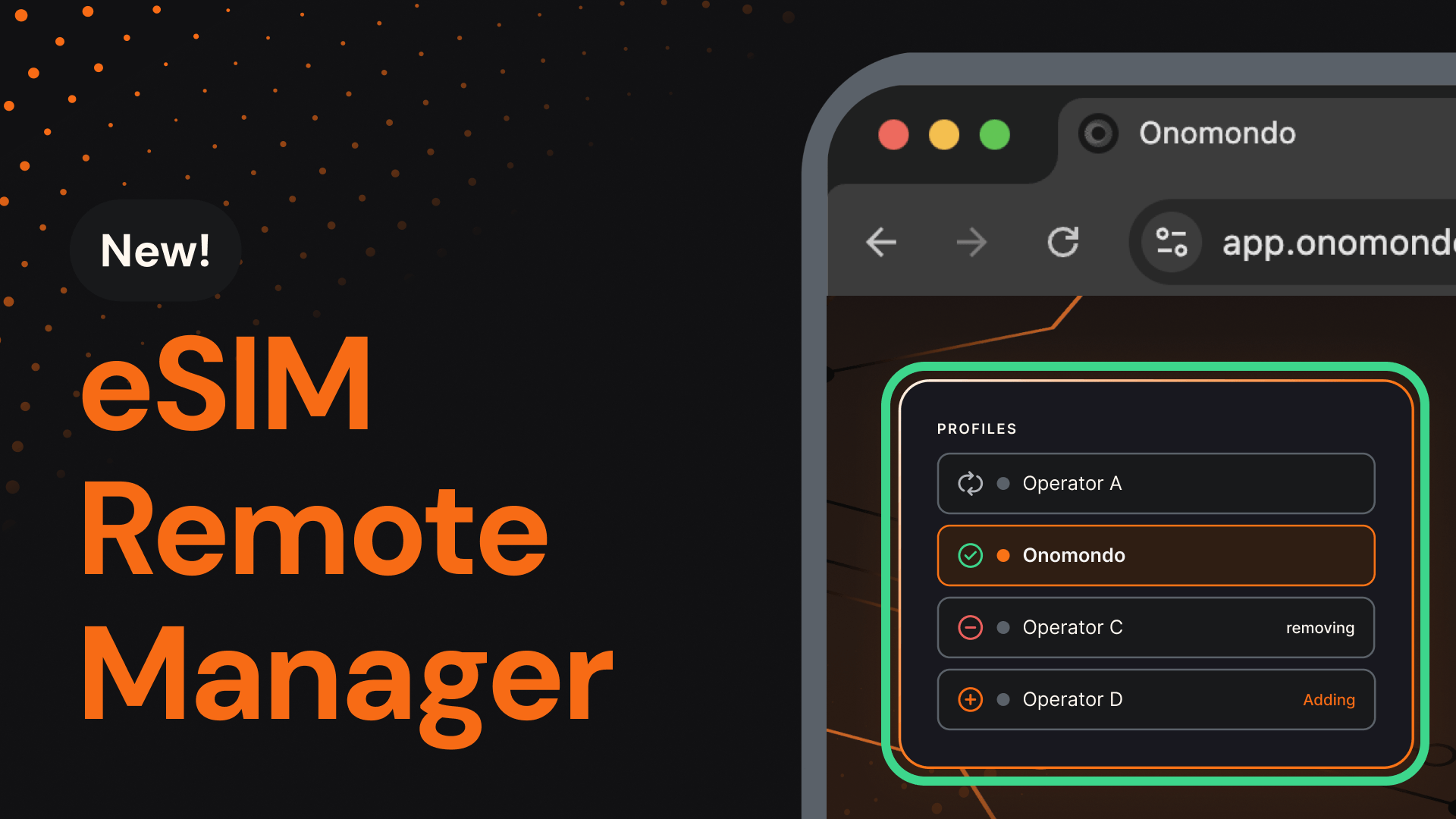
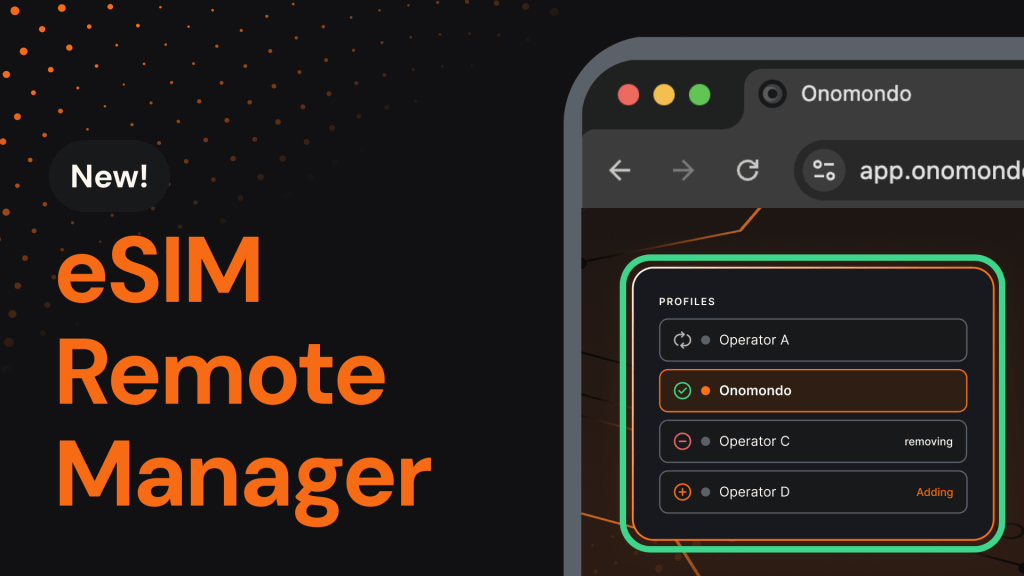
The Onomondo eIM (eSIM IoT Remote Manager) is our control layer for SGP.32. It lets you manage which operator profile runs on every SGP.32 eSIM in your fleet, remotely and through one API.
You’ll now be able to:
- Manage profiles remotely: Enable, disable, and delete operator profiles on any deployed device, and trigger a fresh profile download, all through a REST API.
- Use one hardware SKU across markets: Choose the operator profile after manufacture and load eSIM profiles remotely where permanent roaming isn’t an option.
Why it matters
The real value isn’t simply switching profiles. It’s being able to change connectivity decisions after the device has left the factory. That means you can enter new markets without creating another hardware SKU, move a fleet away from an underperforming network, and enter operator renewals knowing you have another option.
When profile changes happen over the air, those decisions become reversible. You launch into restricted markets without a new SKU, carry real leverage into every renewal, and move a fleet off a network that isn’t performing.
Connectivity becomes something you can change when the business changes, instead of something you have to live with for the device’s lifetime.
What makes ours different
Most eIMs come bundled with a connectivity contract, leaving the same vendor controlling both your connectivity and the layer you need to change it. Ours doesn’t.
The Onomondo eIM works with any SGP.32 eUICC with a configured IPAe or IPAd, with or without Onomondo connectivity. Bring your own SIMs, profiles, and operator relationships, or use ours. And if you decide to move eIM management to another provider, the handover is standard, not a commercial negotiation.
How it works
There are three ways to get started, depending on your hardware and where you are in the deployment process:
- Use the full Onomondo setup: Onomondo SIMs, operator profiles, and eIM together.
- Bring your own SIMs: Download Onomondo profiles over the air through SM-DP+ and integrate our eIM with your devices.
- Start at the factory: Receive SIMs with Onomondo as the bootstrap profile, ready for global activation after deployment.
How to get started
We’d rather you tested it than took our word for it:
- Tell us where you’re deploying, how many devices you’re working with, and when production starts.
- We’ll send you test SIMs and share the documentation, or work with your SGP.32 SIMs if you have them
- Run your first over-the-air profile switch on your own hardware before committing any budget.